The Non-fiction Feature
Also in Bulletin #57:
The Fiction Spot: The Perks of Being a Wallflower by Stephen Chbosky
The Product Spot: Metro parks
The Pithy Take & Who Benefits
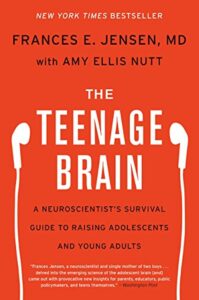
Professor Dr. Frances E. Jensen, along with journalist Amy Ellis Nutt, help unravel what is often dismissed as, “Oh, that’s just how they are at that age, they’re crazy”–the teenage brain. For a long time, scientists believed that the adolescent brain was essentially an adult one. Recent discoveries, though, have revealed that during these years, the teenage brain is growing at an incredible rate, with serious peaks and pitfalls.
I think this book is for people who seek to understand:
(1) the general structure of the brain and what different parts of the brain do;
2) what happens to the brain during the teenage years, including not only growth and an increased capacity to learn, but also why it is more vulnerable to addiction and stress; and
3) practical suggestions for navigating this period of time.
The Outline
The preliminaries
- Teenagers are trying to figure themselves out, and their brains and bodies are undergoing extensive reorganization.
- Their apparent recklessness, rudeness, and cluelessness are not totally their fault–there are neurological, psychological, and physiological explanations.
- Re hormones, the most important thing to remember is that the teenage brain is “seeing” these hormones for the first time.
- This means that the brain hasn’t figured out how to regulate the body’s response to these hormones.
- The hormones testosterone, estrogen, and progesterone trigger physical changes in adolescents.
- For girls, this means things like the development of breasts and the beginning of menstruation; for boys, this means things like the deepening of their voice and the growth of facial hair.
- There are also hormones active in the limbic system, which is the emotional center of the brain.
- So, mood can fluctuate greatly–adolescents are not only emotionally volatile, but may even seek out emotionally charged experiences, like dramatic books or a roller coaster.
- During this time, their brains also have an increased response to stress, which is in party why anxiety disorders typically arise during puberty.
- Otherwise put, they just don’t have the same tolerance for stress as adults do, and are thus more likely to exhibit stress-induced responses like colds, headaches, upset stomachs, nail biting, and eating disorders. Anxiety begets anxiety.
- Overall, an amped-up, stimulus-seeking brain that’s not fully capable of making mature decisions, hits adolescents pretty hard. This excitable brain can be adversely affected by things like stress, drugs, and chemical substances.
Building a brain
- Children and teen brains are very impressionable, as their experiences can be imprinted on their brains and influence the type of adults they become.
- Specifically, a teen brain has an overabundance of gray matter (the neurons that form the basic building blocks of the brain) and an undersupply of white matter (the connective wiring that helps information flow from one part of the brain to the other).
- So, just because a teen might look like an adult, does not mean that they are one mentally.
- The brain wires itself, starting in the back, with structures that mediate our interaction with the environment and regulate our sensory processes–vision, hearing, balance, touch, and sense of space.
- These structures include the cerebellum, which aids balance and coordination; the thalamus, which is the relay station for sensory signals; and the hypothalamus, a central command center for the maintenance of body functions, including hunger, thirst, sex, and aggression.
- The brain’s frontal lobes control our ability to generate insight, judgment, and planning. They’re the source of our self-awareness and ability to assess dangers and risks.
- Otherwise put, the frontal lobes hold our “executive” function.
- For all of this, for teens:
- The connectivity of the brain slowly moves from the back to the front. The very last place to “connect” is the frontal lobe.
- The teen brain is only about 80% of the way to maturity.
- That 20% gap, where the wiring is thinnest, is crucial and goes a long way towards explaining teens’ puzzling behavior. Their mood swings, irritability, impulsiveness, and explosiveness, the inability to focus, to follow through, and to connect.
- This is also why we have to constantly remind them of things, especially that accidents can happen at any time, and many different situations can get them into trouble.
- Repetition
- Repetition is super important. One of the jobs of the frontal lobes, which controls executive function, includes something called prospective memory.
- This is the ability to hold in your mind the intention to perform a certain action at a future time, like remembering to return a phone call.
- Prospective memory is associated with the frontal lobes and although it continues to develop, it doesn’t do so very much between the ages of 10 and 14.
- So, the ability to remember to do something is just not keeping up with the rest of a teenager’s growth and development.
- Repetition is super important. One of the jobs of the frontal lobes, which controls executive function, includes something called prospective memory.
- Switching tasks
- The parietal lobes contain association areas that are critical to being able to switch between tasks, something that also matures late in the teen brain.
- Teens like to say that they can multitask.
- But their brains aren’t built for this.
- This is also why so many teens and young adults die of distracted driving.
- This can also affect doing homework–it’s harder to focus on homework when you’re listening to music, texting someone, and messaging on an app.
- You may need to design an environment that mitigates distractions.
Under the microscope
- The human brain has around 100 billion neurons.
- A neuron is a nerve cell – it responds to a stimulus with an electrical signal, called an action potential.
- So, when we see the color red, smell a flower, or remember a name, action potentials are happening.
- If you think of each neuron’s cell body as a point in a relay, there has to be an incoming and outgoing signal.
- When the outgoing signal reaches its end point, it releases packages of chemical messengers, called neurotransmitters.
- And, the point of contact between two neurons is a synapse, and this is where the action takes place in the brain.
- Synapses are increased in infancy through adolescence, peaking in early childhood.
- Excitation is a key element of learning–the period in early childhood where excitation is so prominent is a critical period where learning and memory are more robust than later in life.
- A neuron is a nerve cell – it responds to a stimulus with an electrical signal, called an action potential.
- Although you’re born with the vast majority of your neurons, most of the synapses in the cortex are not fully formed.
- The gray matter–brain tissue that processes information–thickens throughout childhood. As a teen, there’s an “overgrowth” or gray matter, which results in a teen’s heightened capacity to learn new things quickly.
- This overgrowth, though, can cause a type of cognitive dissonance, where the brain has trouble picking out the right signals from all the noise.
- As for white matter, myelin, it gets produced well after adolescence and makes communication between brain areas more efficient.
- But, without as much myelin, a signal from one area of the brain (like fear, coming from the amygdala), has trouble sending a signal to another part of the brain (like to the frontal cortex’s sense of judgment).
- So, for teens whose brains are still being wired, this means that they sometimes find themselves in dangerous situations and have difficulty thinking of what to do next.
- For example, think of how teenagers react to emergencies involving a friend who drank too much alcohol. They either don’t respond or try to solve it themselves.
- So, for teens whose brains are still being wired, this means that they sometimes find themselves in dangerous situations and have difficulty thinking of what to do next.
- But, without as much myelin, a signal from one area of the brain (like fear, coming from the amygdala), has trouble sending a signal to another part of the brain (like to the frontal cortex’s sense of judgment).
Learning – a job for the teen brain
- The brain’s ability to mold itself is referred to as “plasticity.”
- Thinking, planning, learning–this all influences the brain’s physical structure, per the theory of neuroplasticity.
- Plasticity is front-loaded in childhood and adolescence because survival depends on knowledge of one’s environment, so the young brain has to be flexible depending on the environment they’re raised in.
- How does learning happen?
- First, information is received through one of the five senses (hearing, seeing, tasting, smelling, touching).
- It’s transmitted by synapses through a network of neurons and is stored in short-term memory.
- This region is highly volatile and is constantly receiving input from all the senses.
- Second, from here, after it’s processed in short-term memory, it’s compared with existing memories.
- If the information matches, it’s discarded as redundant.
- If the information doesn’t match–it’s new–and it’s sent to one of the brain’s locations that stores long-term memories.
- This transmission is not perfect.
- For example, in the same way that the otherwise seamless signal coming from your TV is occasionally interrupted, briefly distorting the picture, so too does memory degrade as information races up and down your brain’s neurons.
- So, your memories are never perfect, and have holes and discontinuities, which we sometimes fill in (albeit unconsciously) with false information.
- The brain is programmed to pay special attention when it gets new information, which is what learning really is.
- Specifically, the more activity between a specific set of neurons, the stronger the synapse. Otherwise put, brain growth is a result of activity.
- The more a piece of information is repeated, the stronger those neurons become, and the connection embeds, like a well-worn trail in the woods.
- Frequency and recency are critical–the more frequently and the more recently we learn something and recall it or use it again, the more entrenched the knowledge.
- Think of remembering the route to and from work and home, or how to use a new app on your phone.
- This transmission is not perfect.
- Memories are easier to make, and last longer, when acquired in teen years, compared with adult years.
- This means that this is such an important time to identify strengths and invest in emerging talents.
- It’s also the time when you can get the best results from special help for learning and emotional issues.
- Along the same lines, we’ve thought for a long time that the IQ with which you reached in grade school was the final word on your intellectual destiny.
- This is not true–there is solid data demonstrating that your IQ can change significantly during your teen years.
- With all this, though, there are also a lot of inefficiencies with teen brains, including attention, self-discipline, task completion, and emotions.
- The mantra “one thing at a time” is good to repeat to yourself.
- Try not to overwhelm teens with instructions. Instead, even just encouraging them to stop and think about what they need to do can increase blood flow to the areas of the brain involved with multitasking, and slowly strengthen them.
- When giving more complicated instructions, it can be helpful to have the teen write it down. For managing time, show them how to use a calendar, and have them write down their daily schedules.
- By doing so on a regular basis, they can train their own brains.
- Above all, though, it’s important to set limits.
- This is one of the most important things that their brains can’t do for themselves.
- For example, be clear about the amount of time they can socialize virtually (just one or two hours a day).
- They obviously will not like this, but it’s up to you to keep tabs and check on them.
- For example, be clear about the amount of time they can socialize virtually (just one or two hours a day).
- This is one of the most important things that their brains can’t do for themselves.
- As for emotional outbursts, it’s first important for you to stay calm, even just by counting to ten.
- The more you treat them as adults, the greater the chance that they’ll try to act that way.
- And explain to them the science of their brains–they’re actually fascinated by the reasons behind what otherwise seem like inexplicable upheavals in their lives.
- But also, they are self-aware enough to know that they have the capacity to modify their behavior. You have to remind them of this again and again.
- That is, brain science isn’t an excuse for crazy, stupid, illegal behavior. Instead, it’s an explanation and a framework.
Sleep
- It can be hard to get teens to go to bed at a normal hour, and even harder to get them out of bed in the morning.
- Sleep is incredibly important, but not well understood.
- Our sleep is controlled by a complex intersection of brain signaling and hormones, which are regulated by maturational stages.
- Teens abide by the adult chronology, with early rising for school.
- But, early rising doesn’t result in an early bedtime–the teen brain doesn’t adjust at the other end of the day. Rather, it has a tendency to hold on to that part of its pattern, resulting in a shrunken sleep period.
- Then, on weekends, teens can slip back into late-morning awakenings, which is their internal clock’s preference.
- Since there’s so much happening in a teen’s brain, they actually need more sleep than their parents or younger siblings.
- Specifically, sleep is the glue that allows us to recollect our experiences and remember everything we’ve learned that day.
- It not only consolidates memories, but also prioritizes them by stripping them down to their components and then organizing those components according to emotional importance.
- Also, it helps teens eat better, and better manage stress.
- Specifically, sleep is the glue that allows us to recollect our experiences and remember everything we’ve learned that day.
- What happens if teenagers don’t get enough sleep?
- Sleep deprivation inhibits the necessary synaptic pruning or prioritizing of information.
- Consistent lack of good sleep can have profound and lasting effects–everything from juvenile delinquency to depression, obesity, high blood pressure, and cardiovascular disease.
- What can you do to encourage your teens to get enough sleep, starting with taking the TV and computer out of the bedroom (bright LED lights disturb sleep cycles!).
- If they’re in a chronic state of sleep deprivation, you have to help even more with prioritizing their tasks, and getting them to bed early.
- If an assignment involves something creative, suggest that it be done first because it involves more complex cognitive skills and more focus. Check on them over the course of the evening, but try not to do so judgmentally.
Taking risks
- Teens are impulsive, and generally more prone to taking risks than young children or adults.
- Evolutionarily, this makes sense–this is the time to separate from the comfort and safety of the parents, to explore the world and find independence.
- This type of experimental behavior is important to engage in because it establishes autonomy.
- The problem, though, is that their underdeveloped frontal cortex means they have trouble seeing ahead, or understanding the consequences of their actions–they are ill-equipped to weigh the harms of risky behavior.
- It’s important to remember that there are many more bad choices available today (though there are many good ones as well).
- For instance, teens can access stressful and inappropriate information on the internet. They’re very vulnerable to the power of suggestion, and now there are a lot more suggestions at their fingertips.
- Despite all this, teenagers are not irrational. A person’s reasoning abilities are mostly developed by age 15.
- But then, why do they do crazy things?
- They get more of a sense of reward than adult brains–dopamine is enhanced in the teen brain. Anything, good or bad, that stimulates dopamine, is viewed by the brain as a reward.
- Gratification is at the heart of impulsivity, and those who engage in risky behavior and who have rarely experienced negative consequences are more likely to continue reckless behavior to get more gratification.
- This is why sensation-seeking is correlated with puberty, a time when the neural systems that control arousal and reward are particularly sensitive.
- But since the frontal lobes are not fully developed, teens have a harder time exerting cognitive control over potentially dangerous situations.
- They get more of a sense of reward than adult brains–dopamine is enhanced in the teen brain. Anything, good or bad, that stimulates dopamine, is viewed by the brain as a reward.
- But then, why do they do crazy things?
- Teen brains are also more vulnerable to addiction.
- Neurons fire at much higher rates in their brains, making them very ready to be co-opted for addiction.
- Addiction is really just a specialized form of memory. It happens because some pleasurable stimulus strongly activates synapses in the reward circuit, and the very plastic synapses respond by strengthening those connections, which causes more dopamine to be released in response to each stimulation.
- As such, the craving builds faster in a teen brain than an adult brain.
- What can you do?
- To help them avoid giving into the immediacy of the emotion of rewards, talk to them about different kinds of risky behavior. Underscore that there is no possible way risky behavior is worth the chance of death or serious injury.
- Also, don’t underestimate the power of peer pressure and risk-taking behavior.
- Socializing with friends or playing team sports appears to have protective value in keeping teens out of risk-taking trouble.
Stress
- Teens are generally less protected from stress compared to adults because of how they respond to the stress hormone, THP.
- In adults, this hormone calms us down. For teens, it stirs up additional anxiety.
- Also, stress is terrible for learning. Although a little can help, beyond that, stress leads to inattention and a real inability to learn.
- Specifically, the surge of cortisol during a stress response can interfere with memory in the hippocampus, causing a teen to freeze.
- The other side of all of this vulnerability is resilience–a learned skill.
- Because of this, teens are well equipped to learn how to positively respond to stress.
- To help them with this, you can encourage them to eat well and sleep enough, and take control by setting goals, even small ones, and working toward them one step at a time.
- Also, if they have a trusted adult that they can speak with, that can help enormously as well.
The digital invasion of the teenage brain
- Technology is another way for teens to seek novelty; because their brains are so easy to stimulate, it just takes a little bit to tease it into distraction.
- In many ways, technology and all its forms is a drug.
- The cascade of neuroprocesses that kicks off the brain’s reward circuity, and the rush for dopamine the brain gets, can be triggered just as easily by the newest iPhone as by alcohol or a fast car.
- There is more and more evidence of the effect of excessive Internet use on adolescents and their moods–there is a connection between depression and poor performance in school.
- In many ways, technology and all its forms is a drug.
- What we can do
- The internet makes teens think they can multitask by having on a show, or music, or texting while doing homework. Overall, this can still release stress hormones.
- The best way to help them avoid this is to encourage prioritization and structure. Encourage them to make lists, like what they need to bring home from school, or what they need to finish before bed.
- Set rules like no TV, etc., until certain things are done.
- Move the computer out of their bedroom and into a common area.
- Regular, open, honest, and nonjudgmental communication with your teenager is critical. Familiarize yourself with what they do online, and what sites tempt them the most and when.
- Try to approach this not as something they need to be punished for, but something they need help with to stay balanced.
- The internet makes teens think they can multitask by having on a show, or music, or texting while doing homework. Overall, this can still release stress hormones.
Gender matters
- It’s long been known that girls and boys develop differently. There are anatomical, physiological differences between an adolescent girl’s brain and an adolescent boy’s brain.
- For example, girls have a larger corpus callosum, which means better communication between the brain’s two hemispheres, so girls usually are better at switching between tasks than boys.
- And girls’ language development, like reading and writing, is generally about one year ahead of boys’.
- Additionally, the amygdala, where emotions generally come from, develops about 18 months earlier in girls than in boys in early adolescence. Same for the hippocampus.
- Both boys and girls experience new hormones for the first time during adolescence, and control of those emotions involve the frontal lobes, but this area isn’t fully available to them yet.
- So, they react more or less instinctually to what’s going on around them, because the connections between the emotional and intellectual parts of the brain are still forming.
- Last, the stereotype that men think linearly and logically, while women see things more holistically, is behind the times.
- Researchers found that girls who grow up believing boys are better at math are more likely to avoid harder math classes, despite wide interest in those courses generally.
- This leads to a self-fulfilling prophecy and contributes to the gender gap in the highest levels of math achievement, which are reached disproportionately by men.
- And in a recent study of more than seven million children’s test scores in ten states, researchers found no difference between boys’ math scores and girls’ math scores in either middle or high school.
- Researchers found that girls who grow up believing boys are better at math are more likely to avoid harder math classes, despite wide interest in those courses generally.
Sports and concussions
- Head trauma can result in a lot of things, even when there’s no obvious brain injury, and adolescent brains take a different kind of hit than adult brains–often worse.
- Per the American Academy of Pediatrics, the second highest rate of sports-related high school concussions after boys’ football is girls’ soccer. Concussions can happen in any sport, or even just in situations of severe jostling.
- A concussion is an injury to the brain where there is little to no indication of wound to the skull.
- The cushion in the skull isn’t thick enough to absorb the blow, and the brain hits the side of the skull, damaging neurons. Then, a biochemical onslaught of calcium and potassium floods the brain.
- These chemicals, in excess, damage brain cells.
- And to pump out these chemicals, the brain needs glucose, but after a concussion, glucose distribution is restricted.
- There are plenty of physical side effects of a concussion, like dizziness and headaches, but the cognitive effects include slow thinking, the inability to concentrate or remember new things, and mood changes.
- There can be lingering symptoms for months or even years.
- Brain damage can even result from nonconcussive blows to the head–it just takes repetitive strikes of moderate intensity.
- The damage is difficult to detect because it’s cellular, but severe enough to interrupt normal functioning and cause physical and cognitive symptoms.
- The cushion in the skull isn’t thick enough to absorb the blow, and the brain hits the side of the skull, damaging neurons. Then, a biochemical onslaught of calcium and potassium floods the brain.
And More, Including:
- Significant and fascinating details about how neurons function
- Example after example of how more sleep helps teenagers learn and manage stress
- Chapters on tobacco, alcohol, marijuana, and hard-core drugs, and why the plasticity of teenage brains makes them more prone to these addictions
- Mental health issues, such as anxiety, depression, conduct disorders, eating disorders, and schizophrenia–how you can identify them and how you can help
- Crime and punishment – how the law is finally taking into account the immature brains of adolescent criminals when it comes to sentencing, but as a society we’re still a long way away from coming to grips with how to deal with juvenile criminals who suffer from mental disorders
- The effect of obsessive gaming on the teenage brain
The Teenage Brain
Author: Frances Jensen and Amy Ellis Nutt
Publisher: Harper Paperbacks
384 pages | 2016
Purchase
[If you purchase anything from Bookshop via this link, I get a small percentage at no cost to you.]